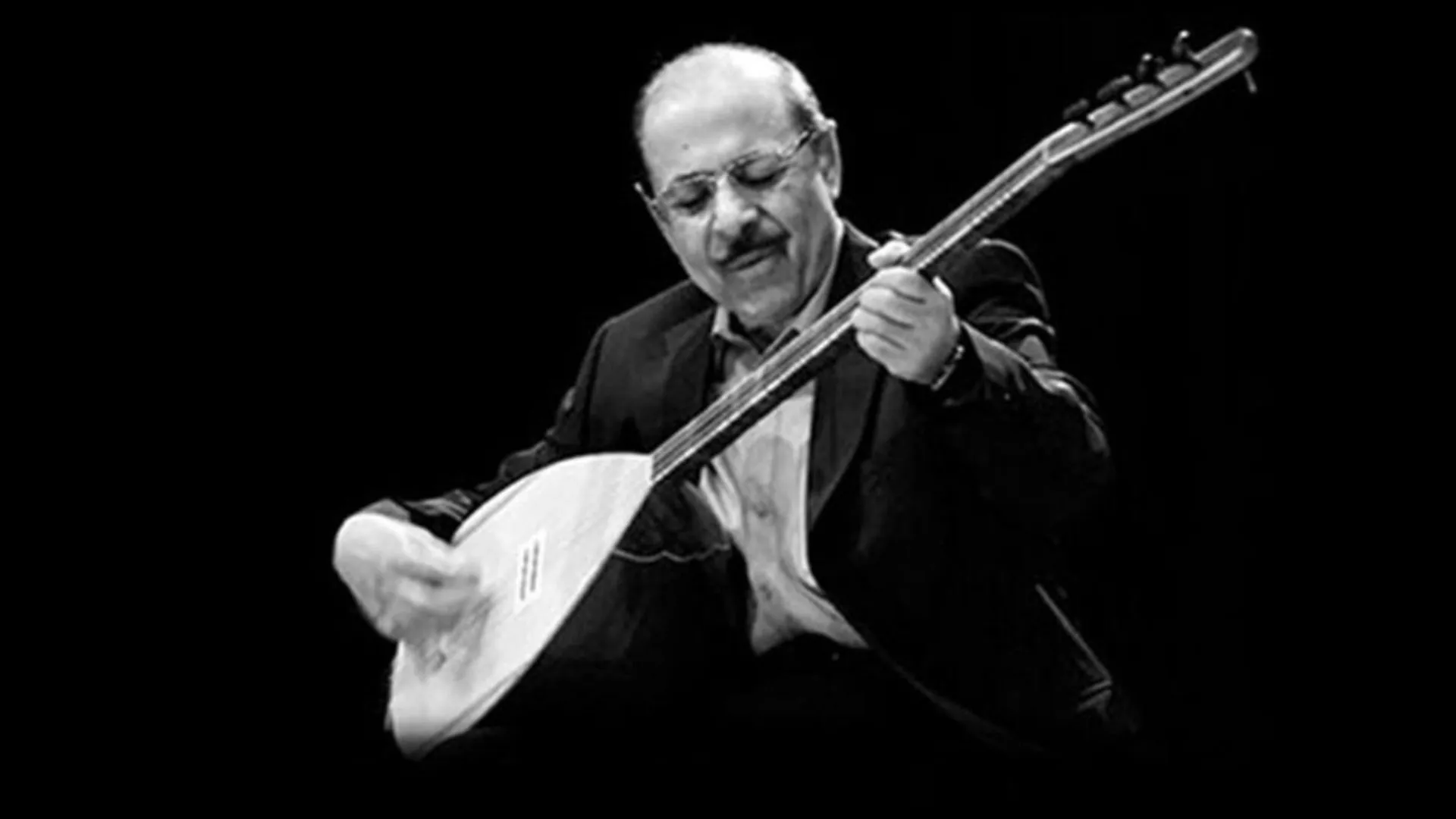
The master who took up his saz and was called "the Plectrum of the Steppe" — Neşet Ertaş — voiced a nation's joy, sorrow and love through his folk songs. He
carried his father's Abdal heritage to the world, and remains Kırşehir's most beloved son.
A Son of the Abdal
Neşet Ertaş was born in 1938 in the Bademlik neighborhood of Kırşehir. His father, Muharrem Ertaş, was one of Anatolia's greatest Abdal musicians and a master of
bozlak. His mother was Döne Hanım. The Abdal — a wandering community that for centuries carried the music of the Anatolian people through weddings and gatherings.
Little Neşet's cradle rocked among the vibrations of saz strings.
He learned the saz first from his father, picking up the instrument while still a child. He walked the path his father had opened — but found his own voice, his
own language.
The Voice of Bozlak and the Saz
Neşet Ertaş's music unites two great veins: the bozlak tradition he inherited from Muharrem Ertaş, and the folk-song language he layered with his own
interpretation. Bozlak — that long, lament-toned melody that rises from the depths of Central Anatolia, carrying love, homeland, exile and revolt all at once.
His way of playing the saz is also distinct: the touch of the plectrum on the strings, the agility of the fingers, the natural emotion of the voice — all of one
piece. "Soft voice, hard words" is how his style is described.
A Life Written in Folk Songs
Neşet Ertaş composed and performed hundreds of folk songs. Some have become the songs of the people — passing from tongue to tongue, no longer bound to a single
name. For his admirers, "Neredesin Sen", "Ah Yalan Dünya", "Acıyı Bal Eyledim", "Çiçekleri Bir Bir Açtım" and "Zahidem" are unforgettable.
In every song there is a tale, a lesson of life, a longing. When he sang of love, it ran deep; of exile, painful; of homeland, sincere — never ornament, never
empty performance.
The Years of Exile
From the late 1970s onward, Neşet Ertaş moved to Germany. He lived there for years, singing folk songs to Turkish migrants, voicing Anatolia from foreign stages.
His Germany years also strengthened the modest, quiet, but uncompromising personality he was known for. In exile, his songs were a piece of homeland for those far
from home.
In the 2000s he returned to Turkey for good. He gave concerts, taught younger musicians, and carried his songs to every corner of Anatolia.
A Living Human Treasure
The legacy of Neşet Ertaş was also recognized by institutions:
• 2005 — Presidential Grand Award for Culture and Art of the Republic of Turkey
• 2006 — Honorary Doctorate in Turkish Folk Music from Istanbul Technical University, MİAM
• 2010 — Declared "Living Human Treasure" by the Republic of Turkey Ministry of Culture and Tourism
• Recognized as one of the most important living names of Turkish music
A Farewell to a Folk Song
After a long battle with cancer, Neşet Ertaş passed away in İzmir on 25 September 2012. According to his will he was brought to Kırşehir and laid to rest in the
soil where he was born. His tomb is still visited every day by listeners who carry his songs.
After his passing, his folk songs did not age — on the contrary, they traveled even more powerfully from tongue to tongue. Young musicians reinterpreted his works;
one of his songs went viral on social media, building a bridge across generations.
Seeing Neşet Ertaş in Kırşehir
For visitors who want to follow Neşet Ertaş's trace in Kırşehir, there are two main stops:
Neşet Ertaş Culture and Arts Center — A museum dedicated to the master's life, works and the Abdal musical tradition; a rich archive of his sazes, photographs,
records and videos.
Neşet Ertaş Memorial Tomb — In Kırşehir, on the soil where he was born. Quiet, modest, but a place where every visitor's eyes fill up.
For every music lover visiting Kırşehir, these two stops are essential. The Plectrum of the Steppe's voice still echoes in the city where he was born.
Ready to Explore?
Book your next adventure with kırsehirgezi.com and experience the magic yourself!
Browse Our Tours